
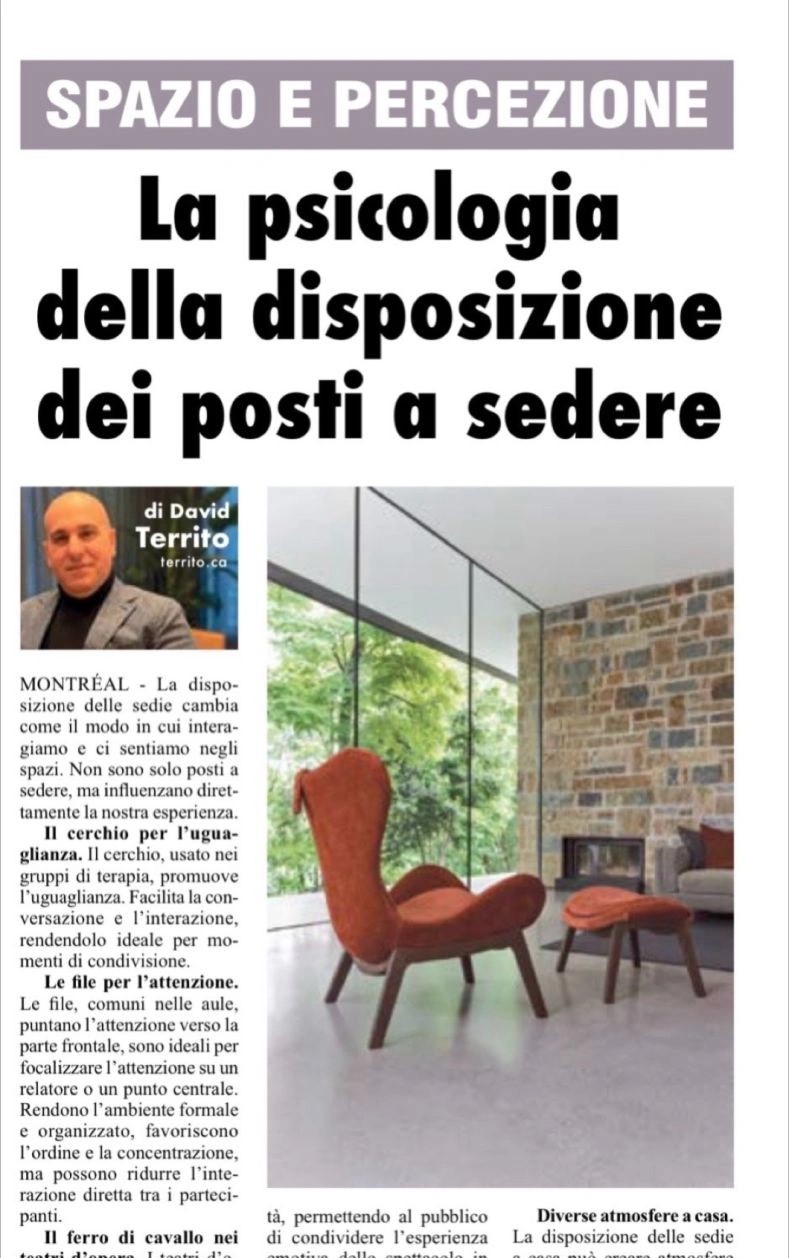
The arrangement of seats changes how we interact and feel in spaces. They are not just places to sit; they directly influence our experience.
Circle for Equality:
The circle, used in therapy groups, promotes equality. It facilitates conversation and interaction, making it ideal for moments of sharing.
Rows for Attention:
Rows, common in classrooms, direct attention towards the front, ideal for focusing on a speaker or a central point. They establish a formal and organized environment, fostering order and concentration, but can reduce direct interaction among participants.
Seating in Opera Theaters:
Opera houses often adopt a horseshoe arrangement for seating, optimizing the view and acoustics for the audience. This design not only maximizes visibility of the stage but also strengthens the sense of community, allowing the audience to share the emotional experience of the performance more intimately and engagingly.
Materials and Design:
The materials of chairs, such as wood, metal, or fabrics like cotton and velvet, determine comfort and style. Wood offers elegance, metal modernity, and soft fabrics like velvet add luxury and warmth, crucial in spaces like living rooms or theaters.
In the Home:
The arrangement of chairs at home can create various atmospheres. A living room with sofas facing each other encourages conversation and intimacy. A reading nook with a comfortable chair and soft lighting becomes a relaxation oasis. These arrangements show how space organization can meet different needs, personalizing each environment.
 English
  French