

Behind every store that bears a family name is a story, and in the case of Maison Territo the story begins in the back of a furniture workshop in 1972, long before the age of concept stores and scent marketing. A young couple, Calogero and Francesca Territo from the Sicilian town of Ribera, arrived in Montreal with a dream and founded Casavogue. The days were long and scented with the sharp bite of glue, the dust of sawed wood mixed with the aroma of espresso and possibility. For the Territo family, those odors were not unpleasant.
They were the smell of heritage. “They meant that a piece mattered enough to be fixed, not replaced,” said David Territo, the Founder of Maison Territo alongside his wife Liv Siv-Ing, a newly opened 11,000-square-foot design destination in Montreal that houses dedicated spaces for Fendi Casa, Dolce & Gabbana Casa, Versace Home, and Bentley Home. One moment, you are in the sleek, automotive-luxury world of Bentley; the next, you are surrounded by the maximalist, technicolor exuberance of Dolce & Gabbana. Each space is an experience that immediately gives the sense that it is less like a showroom and more like a gallery of personal identity. Scented with a bespoke fragrance—the Territo Candle—created in Italy with notes of wood, vanilla, and soft florals, that Territo calls “a modern translation” of his childhood memories.
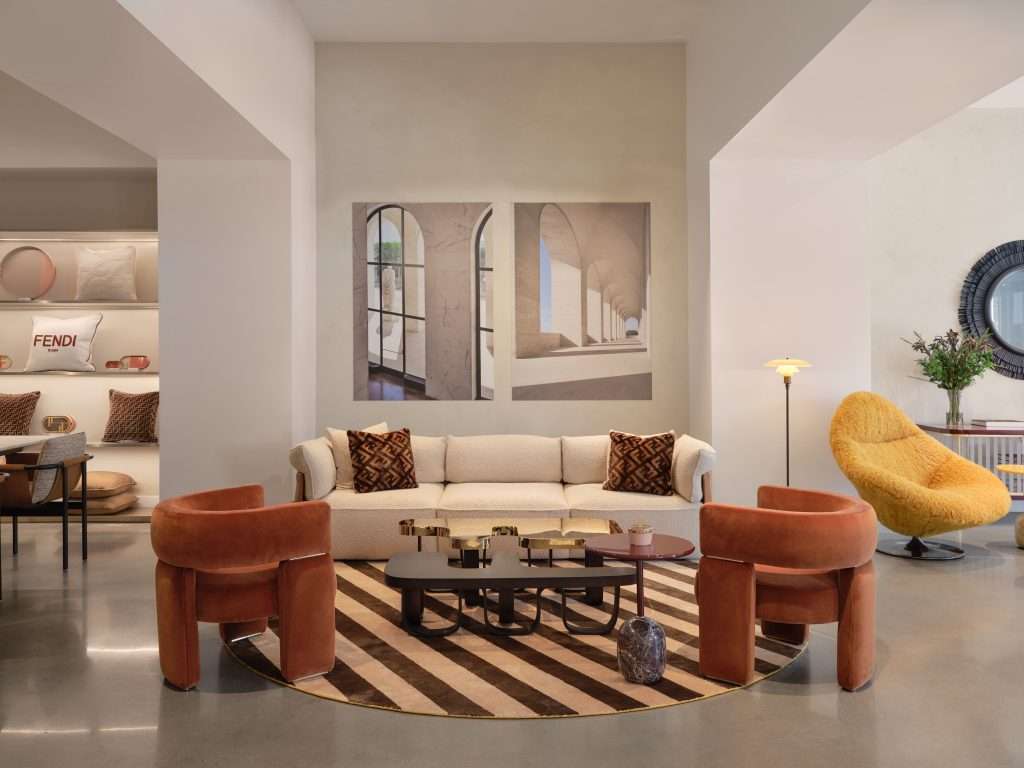
“Your home is a reflection of yourself. When you walk into someone’s home, you understand the people behind it almost instantly. The same way you do in the first ten seconds of meeting someone. Great design acts like a mirror because it shows you who someone is at their core. That is when furniture becomes part of your identity.”
DAVID TERRITO
“They chose Montreal because they were immigrants looking for a better life,” Territo said of his parents. “A city where going from nothing to building something real felt possible.” His father, whose hands learned the trade in Montreal workshops before opening his own factory, built ornate wooden pieces that still survive in the bedrooms of clients today. Those clients, now grandparents, return to tell the owner that their children sleep in the same beds they bought as newlyweds. “That,” he said, “is the greatest compliment you can receive.”
The family business was never just a business. David, one of three brothers, grew up surrounded by materials and long conversations about durability. He recalls travelling to Milan as a boy, walking showrooms with his father, absorbing a worldview where furniture was not about fast turnover but about objects meant to live with you across generations. All three brothers went to university. None planned to join the family trade. Yet, one by one, they all came back.
But life, as David noted, has a way of repeating itself in unexpected patterns. He lost both of his brothers, one in 2016 and one in 2020. The family of five strong personalities, once united by the goal of building something meaningful, was diminished. Yet in the wake of this loss, another pattern from the past emerged, offering strength and continuity. David’s mother, Francesca, had been a successful hairdresser before making the pivotal decision to leave her own career to join her husband in the furniture business. Decades later, history repeated itself. David’s wife, Liv, also chose to leave her professional path to build Maison Territo by his side.
“Life has a funny way of repeating itself,” David reflects. “It became important not just to continue what was built, but to carry it forward bigger and bolder than ever.”
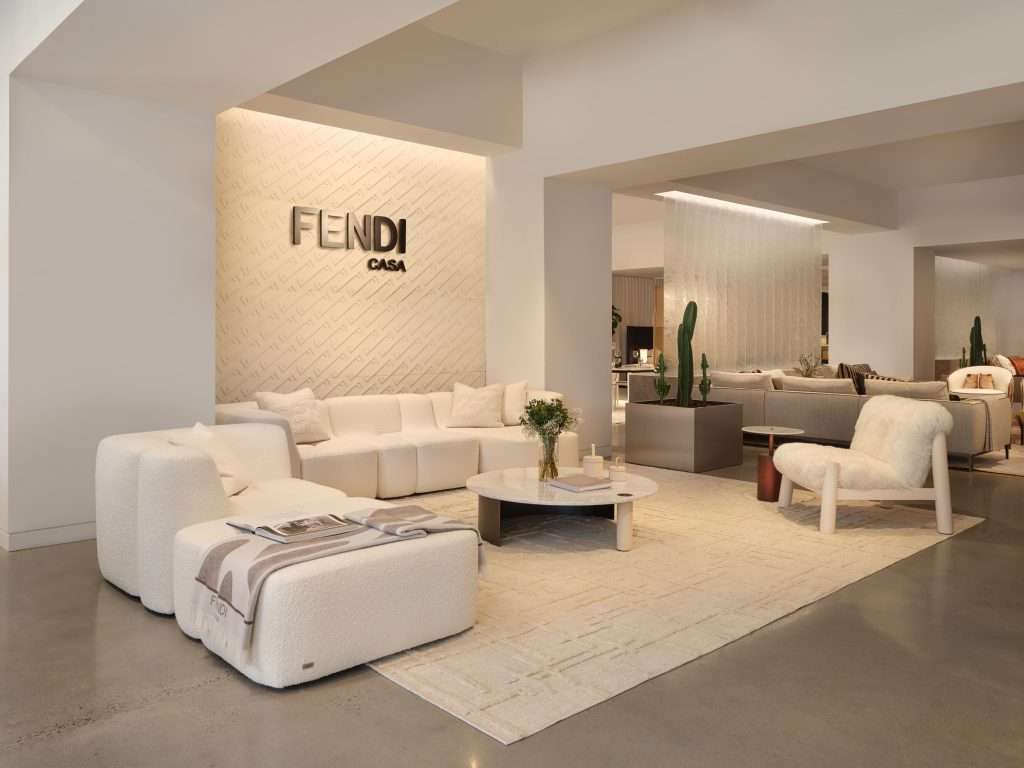
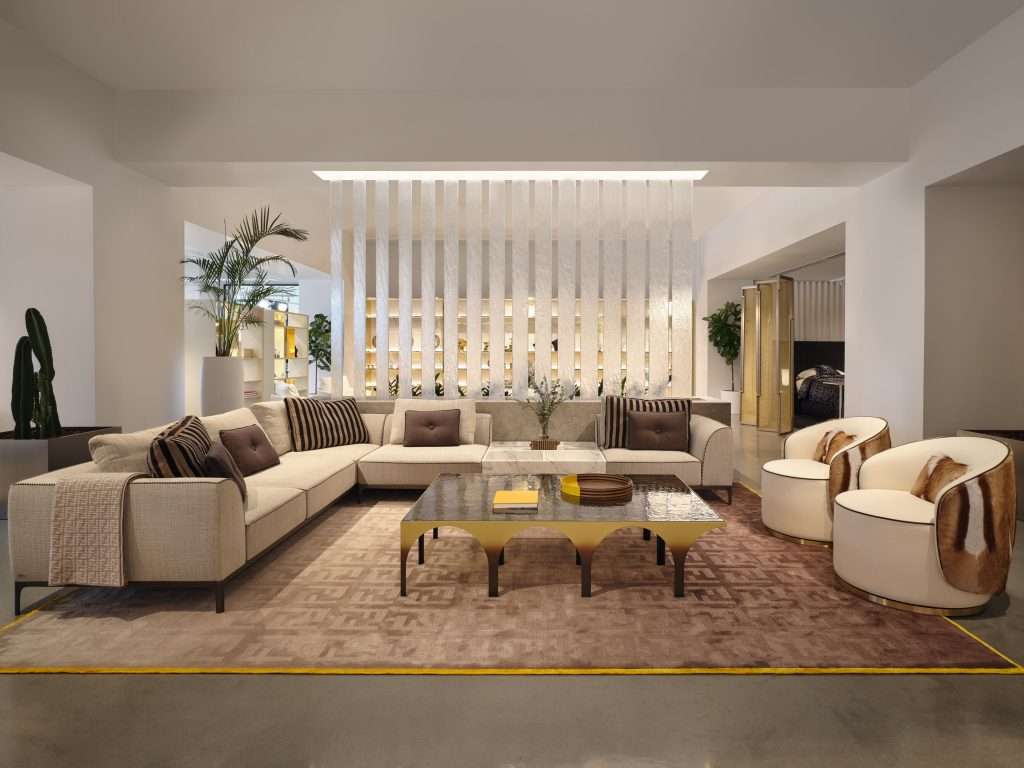
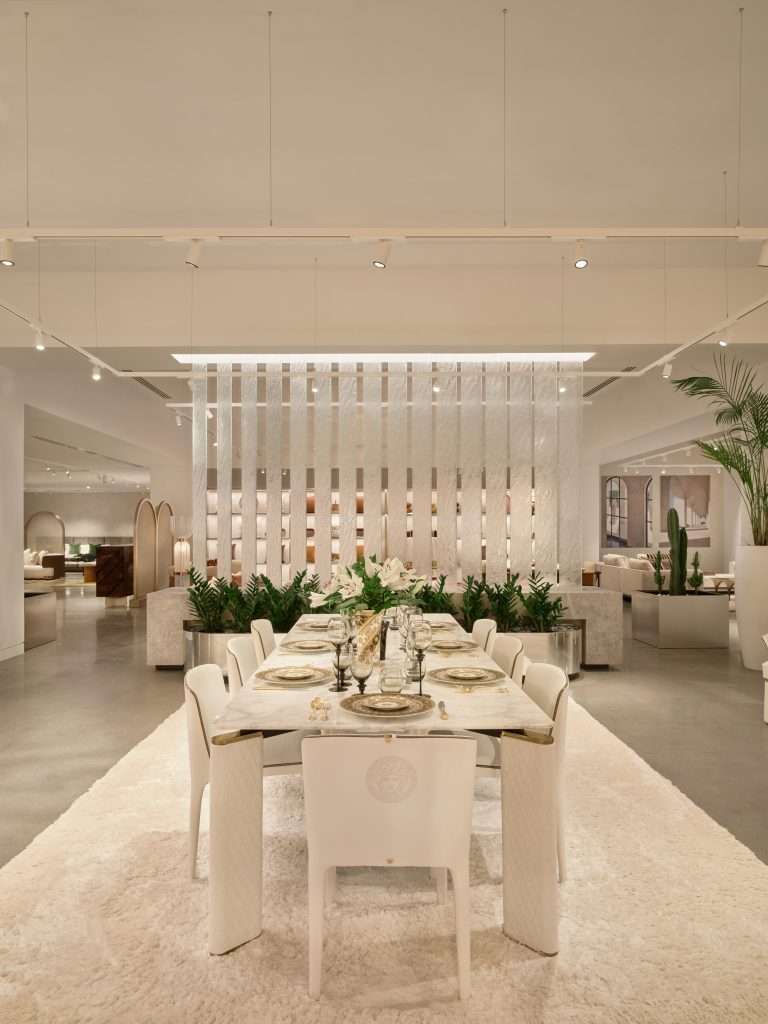
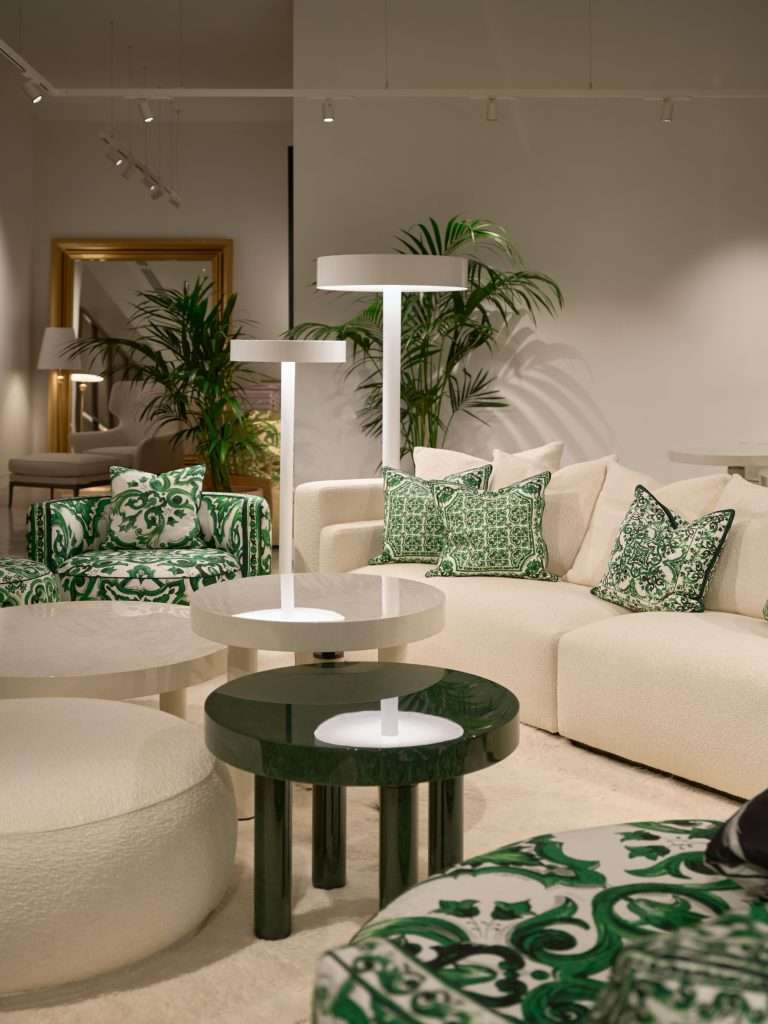
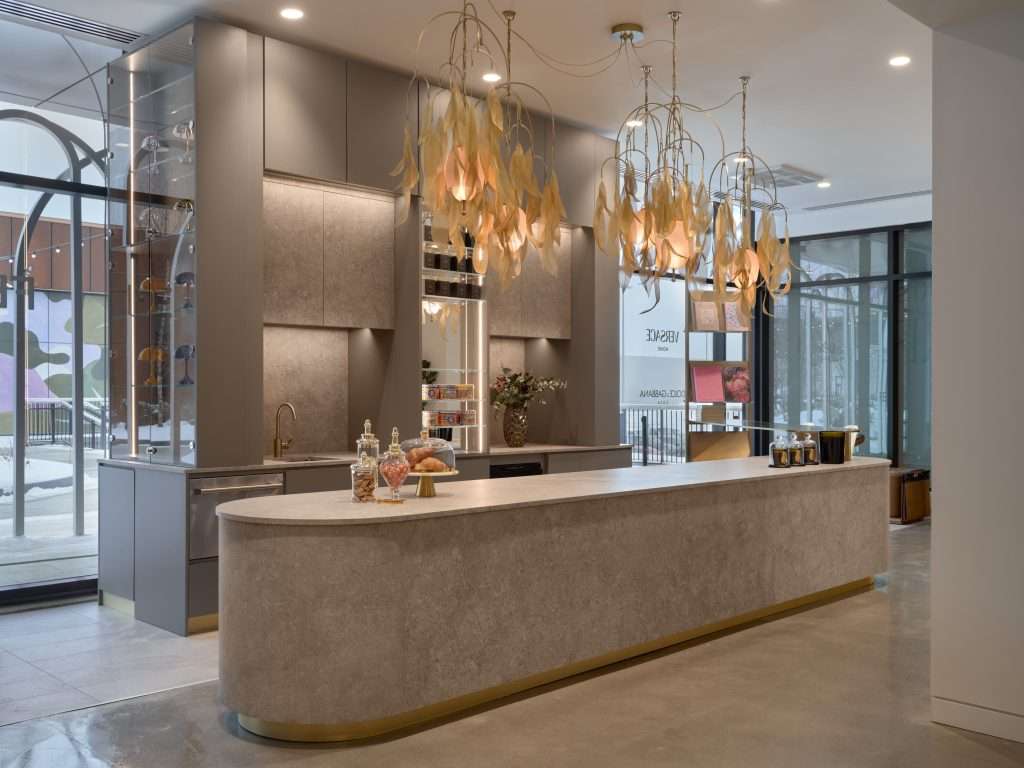
Today, Maison Territo is the result of that resolve. It is a declaration that a family business with roots in a half-century Montreal workshop can think internationally, collaborating with the most influential fashion houses in the world, while remaining grounded in its origins. The ethos is simple: In an era where people buy furniture not just to fill a home but to reflect who they are, fashion houses have a head start. They have spent decades, sometimes centuries, defining identity on the runway. “Fashion is confident,” Territo affirms. “Interior design is often too cautious. Fashion is not afraid of identity, color, or emotion.”
This explains the presence of Dolce & Gabbana Casa, whose furniture carries the same bold Sicilian prints and cultural references as its clothing. It explains Versace Home, with its unapologetic opulence. “Sometimes design surpasses form, telling a story, an era, a heritage,” explain David and Liv, the founders of Maison Territo. These brands, he argues, started as family businesses themselves. Their longevity… comes from identity, consistency, and values. These brands, he argues, started as family businesses themselves. Their longevity, like that of Fendi, which recently celebrated a century in business, comes from identity, consistency, and values.
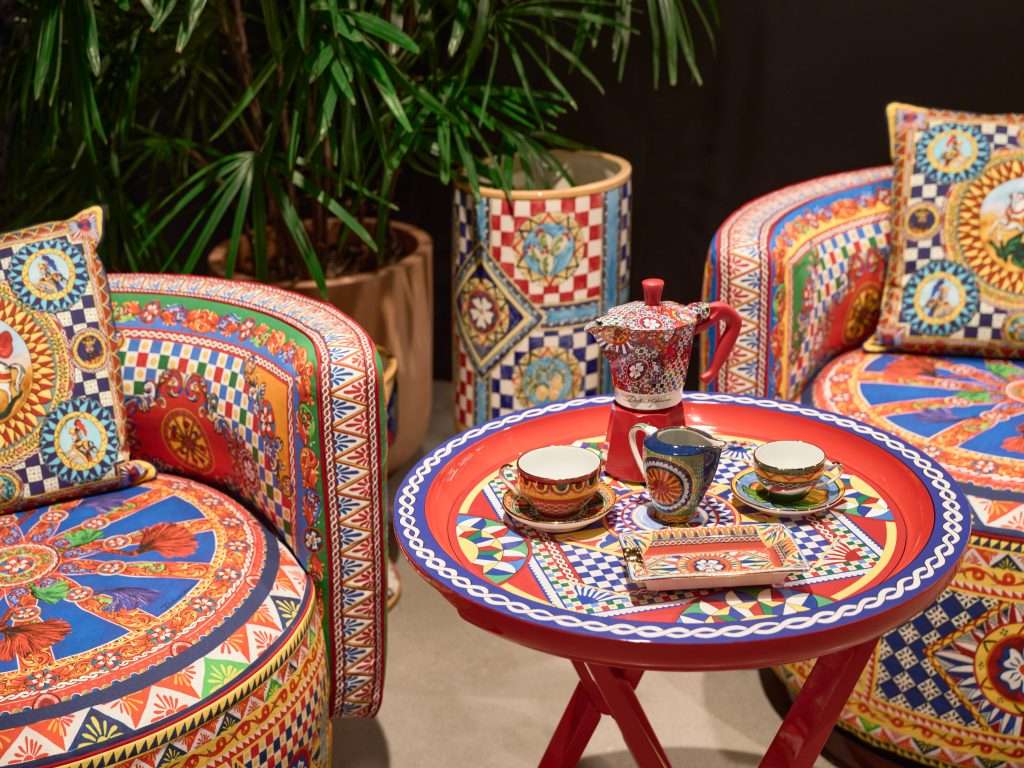
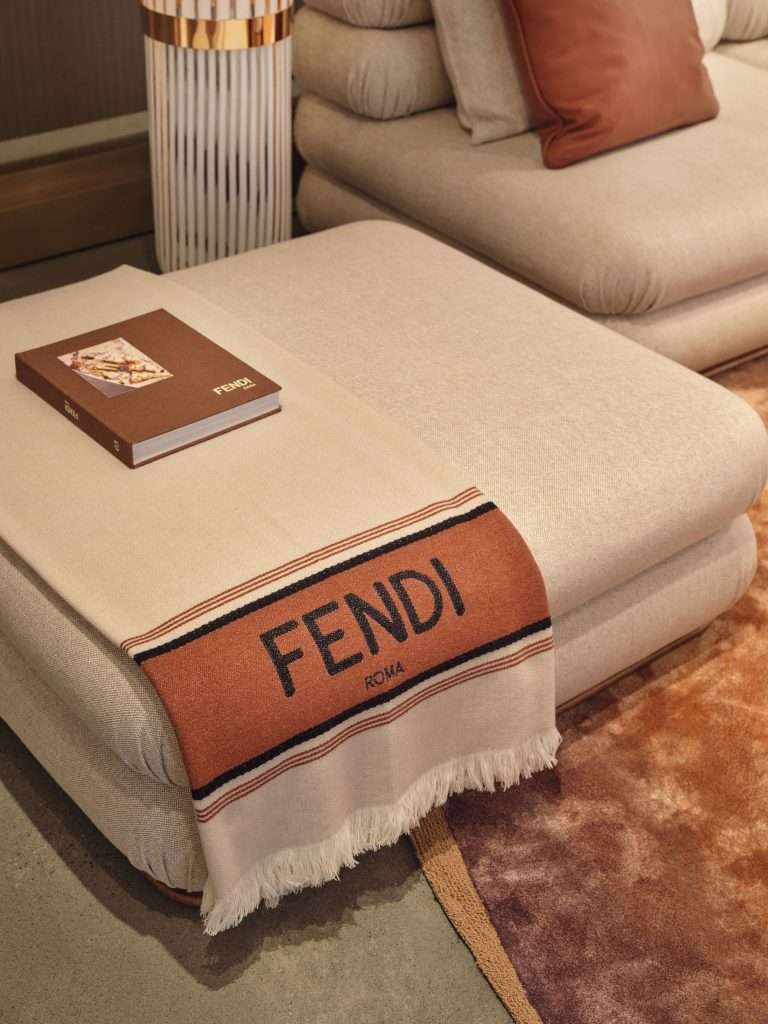
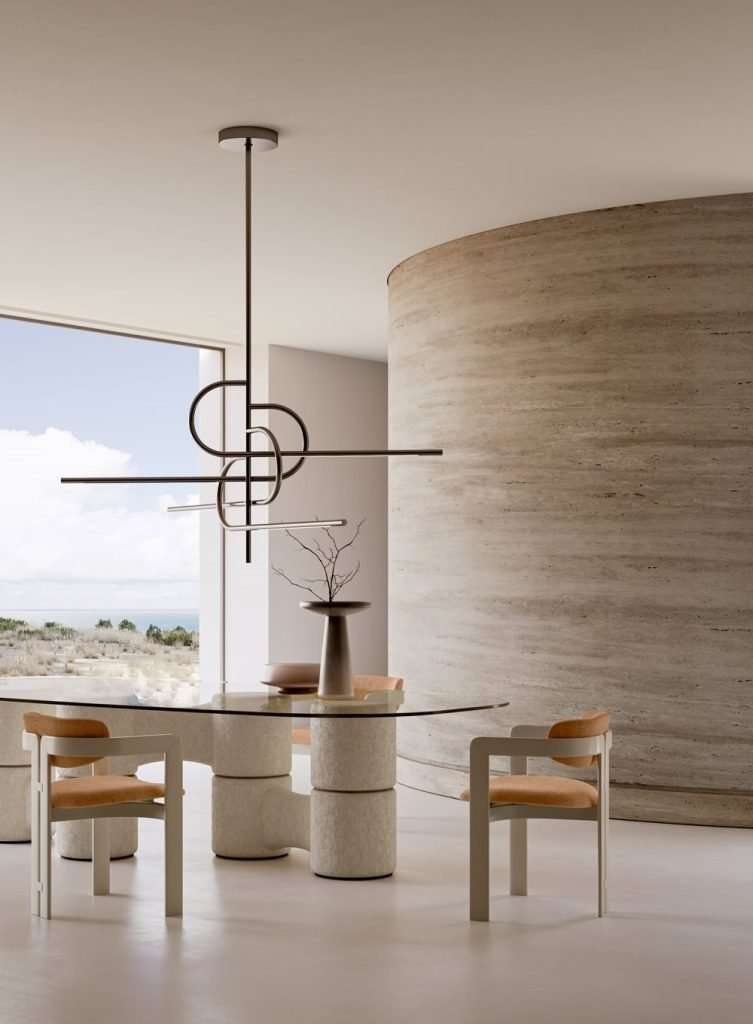
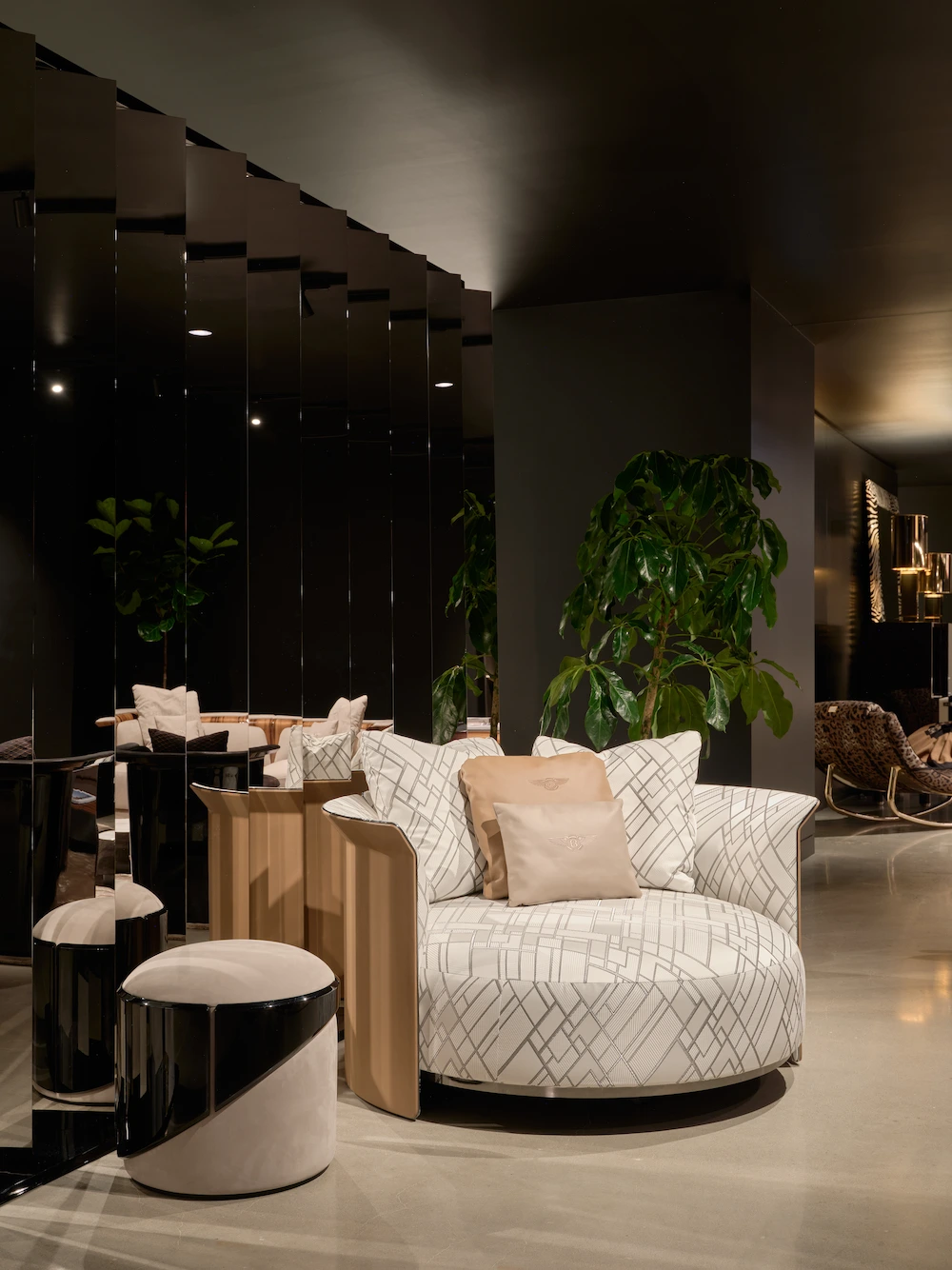
But if fashion provides the language, the home provides the grammar. David draws a direct line from his father’s non-negotiable rule to the curation of space. “Quality always comes before price.” His father never bought based on what a piece looked like on the outside; he opened the drawers, inspected the joints, looked at how it was assembled. For Calogero, there was no target price to hit, only a target for quality. As Chinese factories flooded the market with cheaper goods, he made a clear decision that would define the family’s future: they would not compete on price. “We always looked at the inside first, not the outside,” David recalls. This philosophy was distilled into a single sentence that could have been etched on the workshop wall: “Build it properly, or don’t build it at all.”
That philosophy extends to the experience of shopping itself. In an all-you-can-eat fast fashion age of e-commerce and scrolling, Maison Territo stands for presence. The scent, the controlled sound, the invitation to touch fabrics and finishes—these are all designed to slow people down. “When everything works together, the experience feels instinctive,” Territo said. And instinct, he believes, is leading consumers away from the generic, neutral interiors that have dominated design for years. There is a hunger for personality, for richer materials, for spaces that feel personal rather than staged.
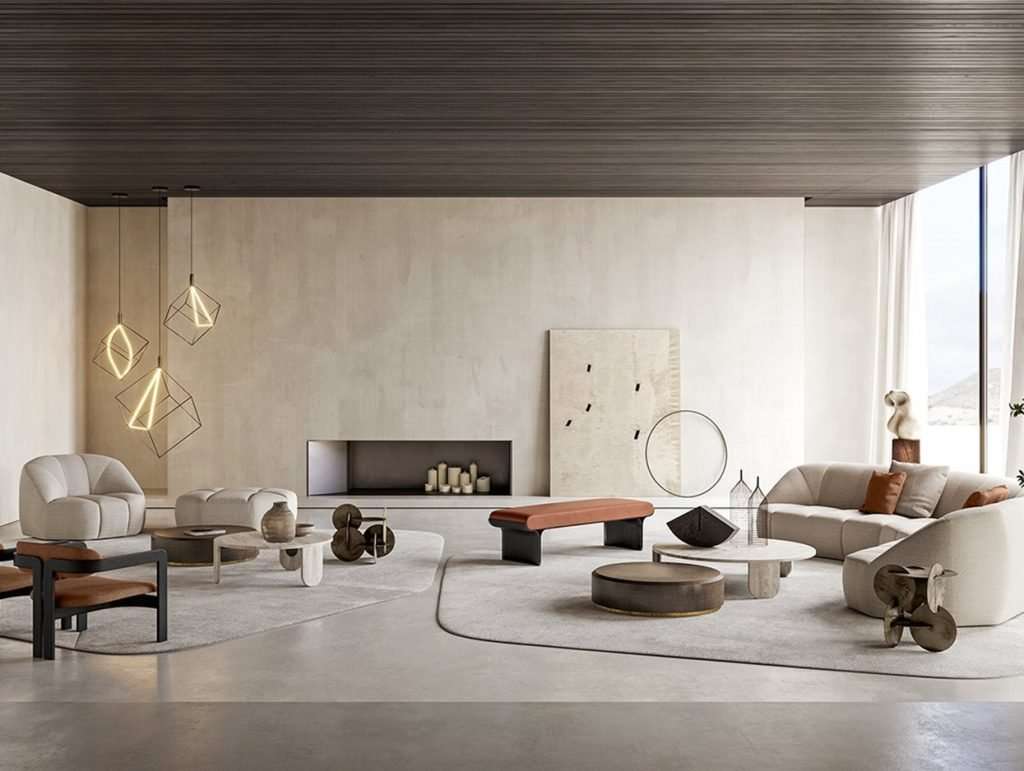
When designing a room, most people focus on the wrong question. The one that truly matters—and is so often overlooked, David suggests, is not “What style is this?” But rather, “How do I want this space to feel, and how do I want people to feel when they walk into it?” It is a question that moves the conversation from aesthetics to memory. From decoration to identity. “Because once you know the feeling,” he explains, “the furniture, the materials, the colors, and the investment all fall into place. Your home is not just where you live,” he continues. “It is where your life happens. Our memories are always attached to moments—that song playing in the background, the smell of food in the kitchen, children running through the hallway, grandparents celebrating Christmas around the table.”
In that sense, Maison Territo is not just about selling Italian furniture in Montreal. It is about bringing Montreal into a global conversation about how we live—not by copying what is done elsewhere, but by presenting a distinct point of view built over fifty years of family history. “Anyone can create a company,” Territo said. “Real brands take time—sometimes decades, sometimes centuries.”
Though the times have changed. His father’s factory is gone, and his brothers departed. The workshop, that dream of varnish, glue, and attention to quality, has grown into a reality that now opens its doors to the world, inviting people not just to browse, but to feel. And in doing so, it has made a compelling case that the most enduring thing one can buy is not just a piece of furniture, but a piece of history—chosen to reflect the feeling of who they truly are.
 English
  French